How AI audio is reshaping modern news apps
Apps are where news publishers build their most valuable audience relationships, and AI audio is playing a growing role in their success.
Leading publishers like The Washington Post, The Guardian, and Business Insider are using AI audio to deepen in-app engagement in a way that's scalable and cost-effective. And they’re deploying it in increasingly creative ways.
Expanding usable moments
Listening is already entrenched in mobile behavior. Music, podcasts, and audiobooks fill commutes, workouts, and quiet moments throughout the day.
AI audio helps your app compete for those same moments within daily routines.
Publishers including The Guardian and the Wall Street Journal let users listen to almost any story inside their apps. They can switch between listening and reading without friction, easily choosing the format that best suits their needs and preferences.
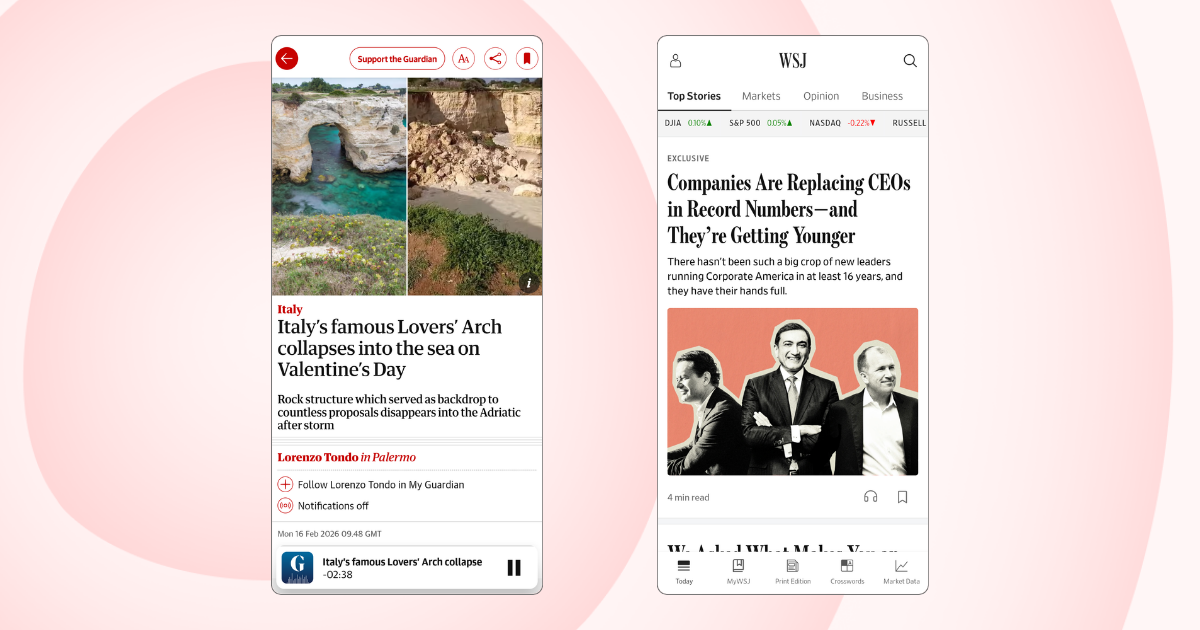
This means audiences can more easily fit news into their day. So, they’re more likely to subscribe—and stay subscribed. Or drive ad impressions.
Making individual articles playable is the foundation to building audio engagement. But the real magic happens when listening extends beyond a single story.
Turning single plays into long listening sessions
Many publishers use playlists and audio queueing to encourage exploration and longer listening sessions.
On The Washington Post and Bulletin apps, starting one article automatically generates a queue of related stories. When one audio finishes, the next one begins, pulling listeners into deeper sessions than they originally planned.
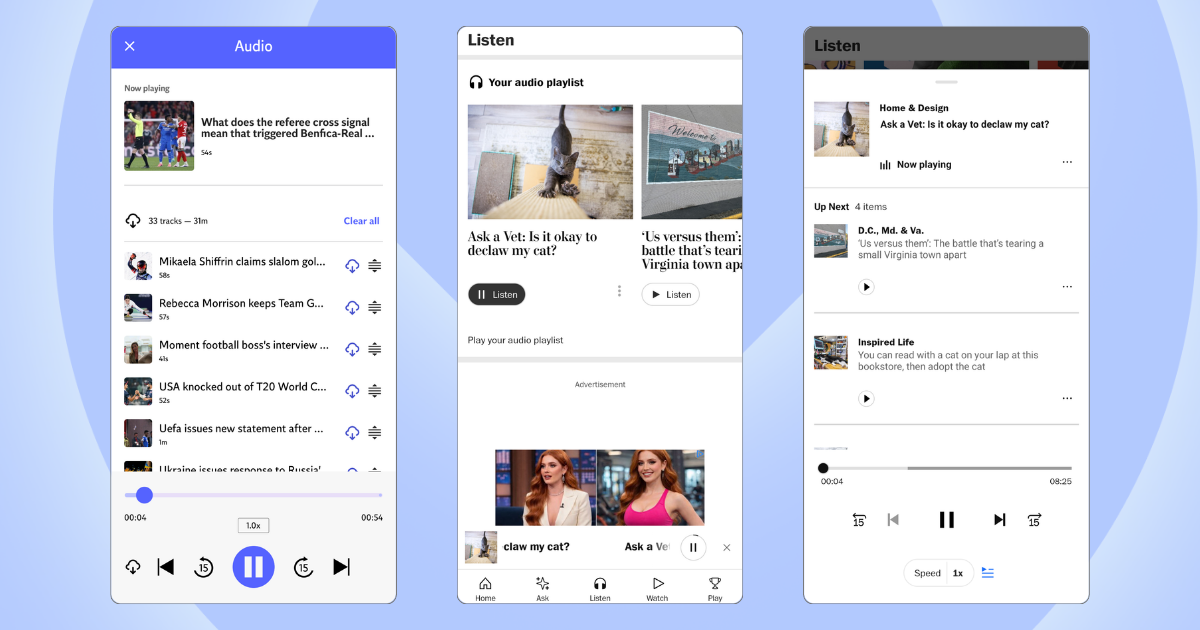
These apps also let users start editor-curated playlists and build custom audio queues, so they can intentionally engage in longer listening sessions.
For example, listeners can queue up articles to play on their commute home. Or start a themed playlist before heading out for a run.
By giving readers the option to step away from the screen while staying connected with your app, you unlock new patterns of news consumption. Patterns that are key to building long-term loyalty.
And if your app integrates with the user’s device, driving sustained engagement becomes even easier.
Making audio mobile-native
Native device integration allows your audio to function as part of a smartphone’s built-in playback system, so listening works the way users expect from any established audio app.
For example:
- Playback continues when the screen locks or the app is minimized
- Stories appear in lock-screen controls and system control panels
- Playback can be controlled using familiar on-screen controls
- Readers can pause and resume with headphones
- Audio works seamlessly in vehicles through CarPlay and Android Auto
- Incoming calls automatically pause playback and resume afterwards
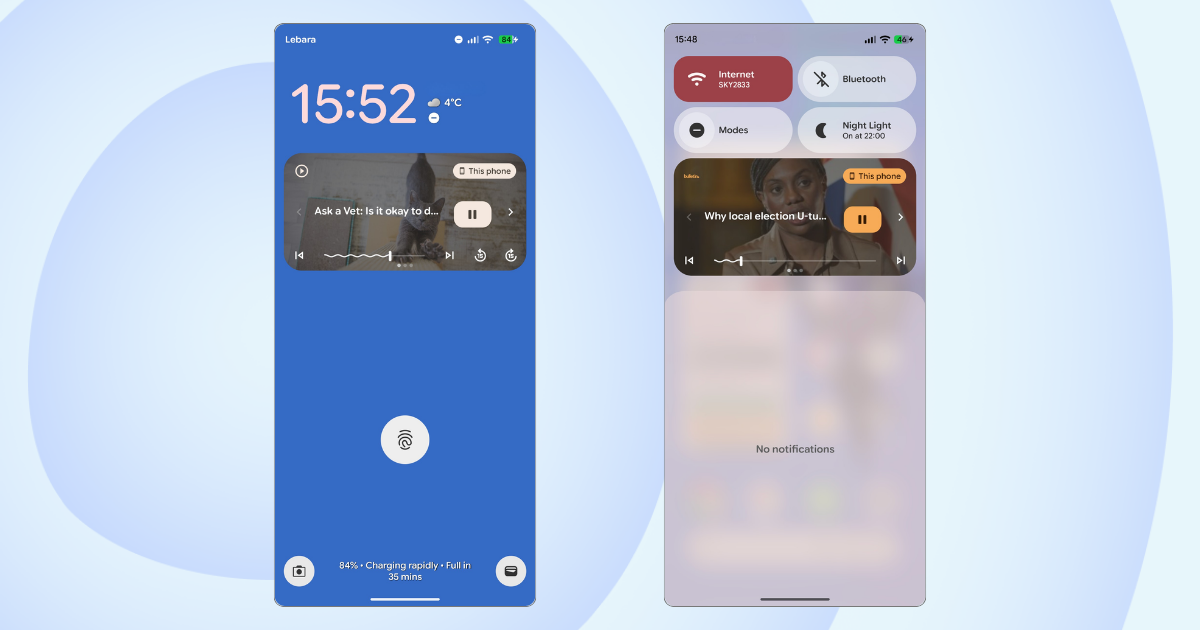
When audio works this way, users can move between tasks without breaking playback. This continuity reduces friction, supports longer sessions, and makes your audio journalism feel like a first-class mobile experience—not an add-on feature.
It also keeps your brand present beyond the app itself, increasing the likelihood that users return and press play again.
Tapping into audio stickiness
For many publishers, in-app audio isn’t just embedded in articles or tucked away in menus—it’s a prominent destination in its own right.
Apps like The Washington Post and Bulletin feature “Listen” tabs, bringing audio to the centre of the news experience rather than treating it as a secondary format.
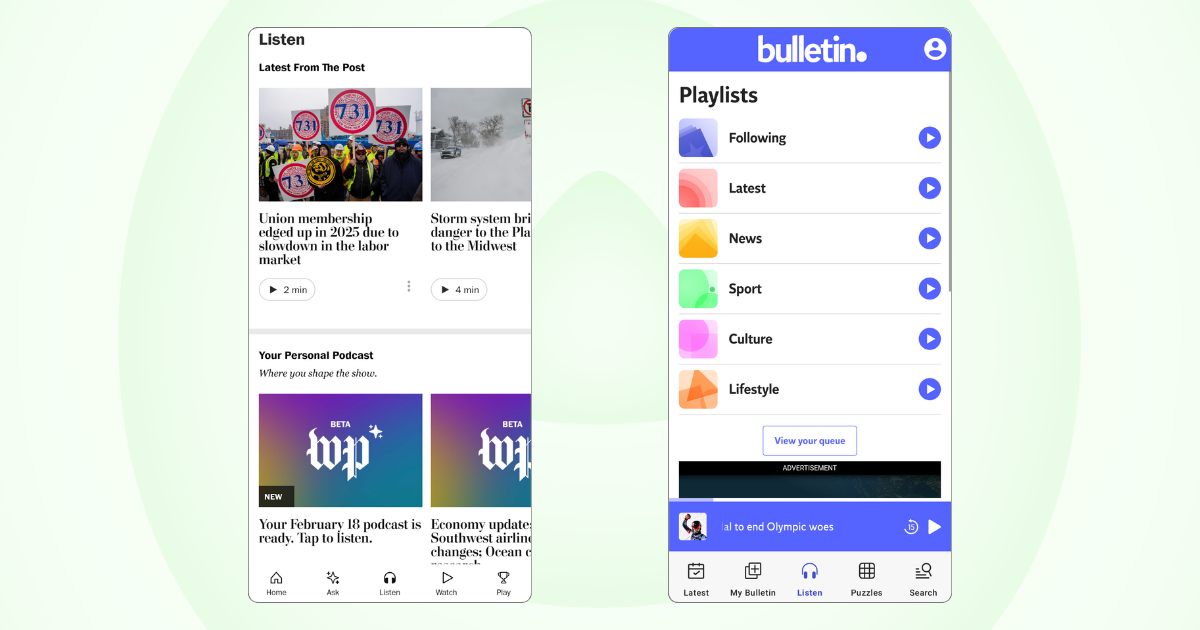
That prominence matters. According to the Pugpig Media App Report 2025, users who engage with audio in publisher apps spend nearly twice as much time as those who don’t.
That means more advertising revenue, more subscription conversions, and stronger subscription loyalty.
Some publishers accelerate in-app audio discovery and adoption even further by:
- Providing personalized audio recommendations based on user data
- Sending push notifications at key audio engagement moments
- Introducing audio during the app onboarding process
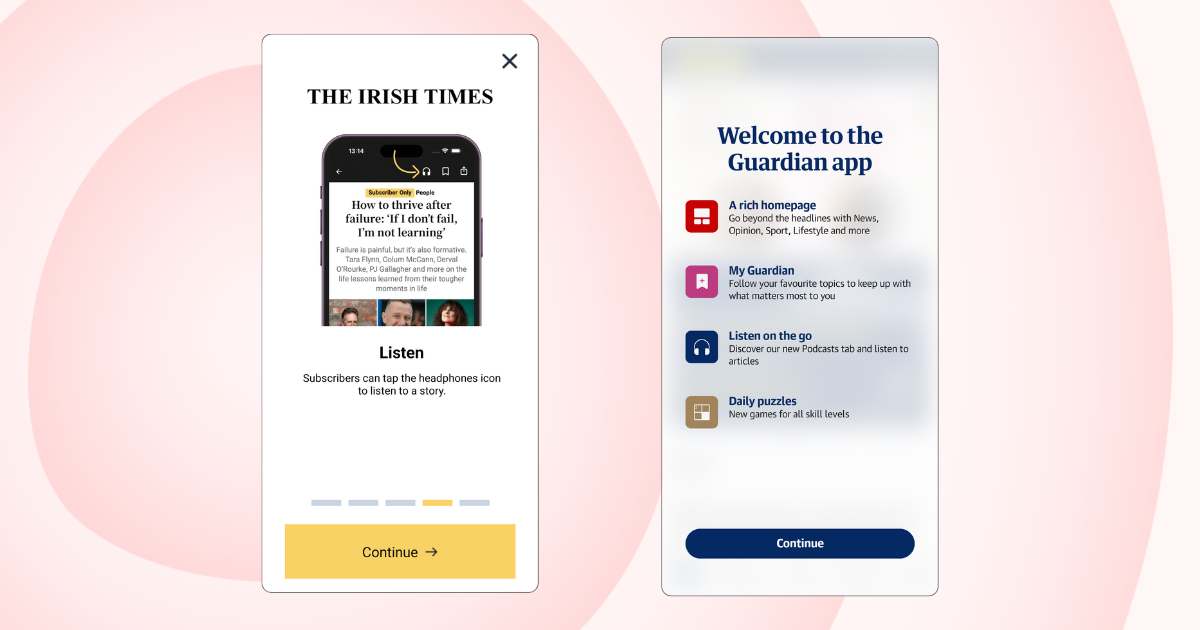
Creating an audio-native experience also means serving stories tailored to specific listening needs.
Designing stories for listening
Many publishers are moving beyond article narration by using AI to reshape written journalism into stories designed specifically for audio.
On the Business Insider app, users are greeted with a prompt to “Listen to the morning headlines”. This concise audio summary helps time-poor audiences quickly absorb the day’s key stories and decide what to explore in more depth.
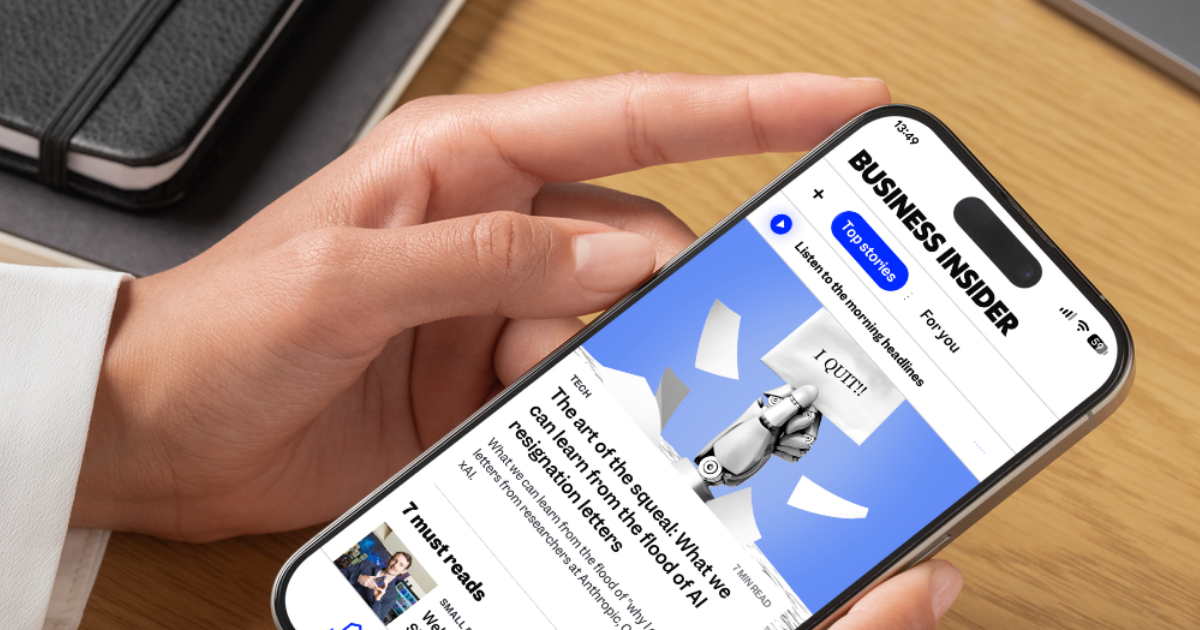
The Washington Post, meanwhile, uses AI to generate daily personalized podcasts based on the user’s preferred topics, reading history, and favorite hosts.
Narrated articles provide depth, while audio editions and summaries provide faster, more engaging ways to catch up on the news. Together, they create a more complete listening experience inside the app.
How to automate in-app audio
Adding audio to your app doesn’t require building an entire workflow from scratch.
BeyondWords automates the entire process, generating audio from your articles and delivering it directly to your iOS or Android apps.
You can:
- Choose ElevenLabs voices or create ElevenLabs voice clones
- Generate full-article narration or automatically produce audio-native stories
- Enable custom playlists and continuous listening
- Embed audio via our customizable player or build your own experience using our Web, iOS, and Android Player SDKs
- Integrate your in-app audio with native device controls
BeyondWords gives you the infrastructure needed to make audio feel native inside your app, without adding editorial or engineering overhead.